
Advanced Platform Technology Center





Seated Balance and Trunk Control with Implanted Neuroprostheses
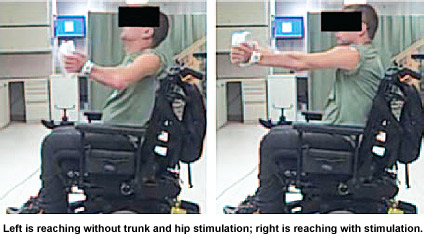
Spinal cord injury (SCI) can result in paralysis of the core trunk and hip musculature which compromises the ability to stabilize the torso while reaching, resist disturbances to sitting balance, and efficiently propel a manual wheelchair, thereby limiting the ability to work, engage in social or leisure activities, and assume an independent and productive lifestyle. There is evidence that stimulation of the trunk and hip extensor muscles can positively alter seated posture, extend bimanual reach, restore erect sitting, and improve wheelchair propulsion mechanics at slow speeds and on level surfaces. However, the benefits of low levels of continuous stimulation seem to disappear during dynamic movements that either requires more stiffens of the core, or modulation of stimulus timing and intensity.
Our objectives for this translational research project are to expand the functionality of neuroprostheses for seated posture and balance by appropriately varying activation of the trunk and pelvis muscles with the intended task automatically without conscious effort by the user. This has the potential to maximize the physical and functional benefits and make them more robust and generalizable to a large segment of the SCI population.
There are a number of goals for the next phase of the project, yet the most important is synchronizing stimulation to the trunk and hip muscles with the manual wheelchair propulsion cycle via the voluntary activity of the intact shoulder muscles.
Principal Investigators: Musa Audu Ph.D. • Ronald Triolo, Ph.D.
Clinical Collaborators: Gilles Pinault, M.D. • Stephen Selkirk, M.D.
Funding Agencies: Veterans’ Affairs Rehabilitation Research and Development; Department of Defense